การเกิดคราบตะกรันส่วนใหญ่เกิดจากภาวะอิ่มตัวยิ่งยวด โดยความกระด้างคาร์บอเนต — แคลเซียมไบคาร์บอเนต Ca(HCO₃)₂ — มีบทบาทสำคัญในการก่อตัวของคราบตะกรัน
การบำบัดน้ำด้วยระบบอิเล็กทรอนิกส์และแม่เหล็กมีผลต่อกระบวนการเริ่มต้นการเกิดผลึก โดยเปลี่ยนจำนวน ขนาด และรูปร่างของผลึก แทนที่จะเกิดเป็นโครงสร้างที่พันกันและเกาะติดกับผนังท่อ การบำบัดด้วย Scalewatcher จะทำให้เกิดผลึกที่มีขนาดเล็กกว่า กลมกว่า และกระจายตัวมากกว่า ซึ่งสามารถถูกพาออกไปได้ง่ายโดยการไหลของน้ำ
ตามแบบจำลองทางวิทยาศาสตร์ล่าสุด สนามแม่เหล็กไฟฟ้ายังสามารถช่วยจัดตำแหน่งกลุ่มคอลลอยด์ที่มีประจุในน้ำใหม่ ลดแนวโน้มที่จะเกาะติดกับพื้นผิว ผลลัพธ์โดยรวมคือการสะสมของคราบลดลง และสามารถถูกขจัดออกได้ง่ายขึ้นผ่านการไหลของน้ำตามปกติ
คราบตะกรันที่มีอยู่เดิมจะค่อย ๆ ถูกขจัดออกผ่านกระบวนการทั้งทางเคมีและทางกายภาพ ที่บริเวณพื้นผิวระหว่างน้ำกับคราบตะกรัน อนุภาคสามารถเกิดการสะสมหรือการละลายได้ ในน้ำที่ไม่ได้ผ่านการบำบัด การสะสมจะมีมากกว่า หลังจากการบำบัดด้วย Scalewatcher อนุภาคมีแนวโน้มที่จะเกาะติดน้อยลง ทำให้คราบตะกรันเดิมค่อย ๆ ละลายกลับเข้าสู่น้ำอย่างช้า ๆ
นอกจากนี้ คราบตะกรันยังสะสมเป็นชั้น ๆ โดยมักมีองค์ประกอบที่แตกต่างกันเล็กน้อย แรงยึดเหนี่ยวระหว่างชั้นเหล่านี้อ่อนกว่าภายในแต่ละชั้น ดังนั้นการขจัดคราบจึงมักเริ่มต้นที่ชั้นกลางเหล่านี้ เมื่อเวลาผ่านไป น้ำที่ไหลจะช่วยทำให้คราบตะกรันที่หลุดร่อนแตกตัวและพาออกไป
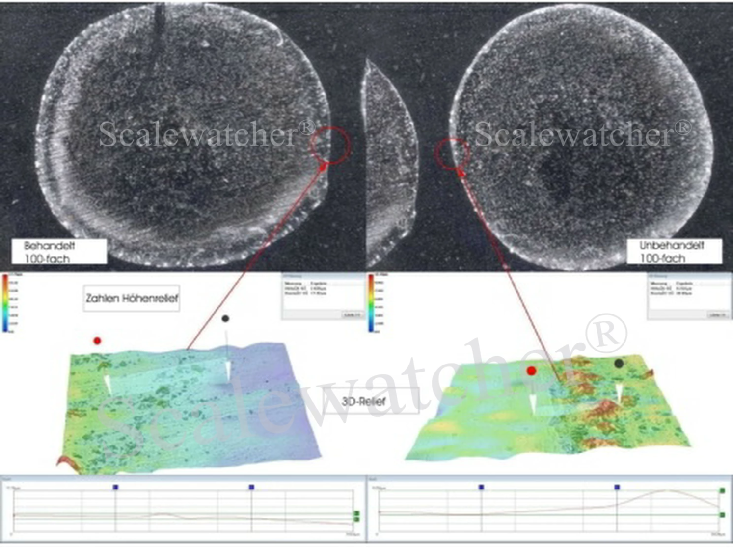
**ภาพประกอบคำอธิบายที่ถ่ายด้วยกล้องจุลทรรศน์ 3 มิติ**
ภาพจากกล้องจุลทรรศน์เหล่านี้เปรียบเทียบหยดน้ำที่ปล่อยให้แห้ง ระหว่างน้ำที่ผ่านการบำบัดและน้ำที่ไม่ได้ผ่านการบำบัด
ตัวอย่างที่ผ่านการบำบัด ซึ่งแสดงอยู่ทางด้านซ้าย จะทิ้งคราบแร่ธาตุที่แบนกว่าและกระจายตัวมากกว่า ส่วนตัวอย่างที่ไม่ได้ผ่านการบำบัด ซึ่งแสดงอยู่ทางด้านขวา จะแสดงให้เห็นว่าอนุภาคแร่ธาตุเกาะตัวกันและก่อตัวเป็นโครงสร้างที่สูงกว่าและหยาบกว่า โครงสร้างที่หยาบนี้คือจุดเริ่มต้นของการเกิดคราบตะกรันแข็ง
การวัดด้วยกล้องจุลทรรศน์ 3 มิติแสดงให้เห็นว่า อนุภาคที่ผ่านการบำบัดมีความสูงเฉลี่ยประมาณ 2.5 µm ในขณะที่อนุภาคที่ไม่ได้ผ่านการบำบัดมีความสูงเฉลี่ยประมาณ 6.5 µm และอาจสูงเกิน 10 µm สิ่งนี้บ่งชี้ว่าการบำบัดด้วย Scalewatcher เปลี่ยนวิธีที่แร่ธาตุตกผลึก ทำให้มีแนวโน้มน้อยลงที่จะก่อตัวเป็นคราบตะกรันแข็งที่เกาะติดแน่น
คำอธิบายทั่วไป explanation** in Thai:
**คำอธิบายทั่วไป**
For a website heading, this is natural and clear.
explanation** in Thai:
**คำอธิบายทั่วไป**
For a website heading, this is natural and clear.
ผลหลักของการบำบัดด้วย Scalewatcher คือการก่อตัวของผลึกจำนวนมากที่มีขนาดเล็กลงและมีลักษณะกลมมนมากขึ้นในน้ำที่กำลังไหล ผลึกเหล่านี้มีแนวโน้มที่จะเกาะติดกับผนังท่อน้อยลง ขณะที่การไหลของน้ำจะค่อย ๆ ขจัดคราบตะกรันเดิมออกด้วยแรงทางกล
ดังนั้น การไหลของน้ำจึงเป็นสิ่งสำคัญต่อประสิทธิภาพที่ดีที่สุด ในระบบที่มีการไหลต่ำหรือน้ำนิ่ง เช่น เครื่องล้างจาน เครื่องทำความชื้น เครื่องระเหย และหม้อไอน้ำบางประเภท คราบตะกรันอาจยังคงเกิดขึ้นได้ แต่โดยปกติจะนุ่มกว่า สะสมช้ากว่า และทำความสะอาดได้ง่ายกว่า